












I still remember a production day when a batch of hair oil separated right in front of us because one ingredient was added too quickly. We had to stop the line, fix the formula, and start again, and that moment taught me how small steps shape the final result.
That experience matches what many of you want to understand about how hair oil is made.
At TY Cosmetic, we handle real production work every day, from ingredient sourcing to finished-product testing. We run test batches, solve formula issues, and guide brands through the full process. This review reflects the same hands-on work we do for business clients around the world.
In this guide, you will see how hair oil is measured, blended, heated, cooled, filtered, checked, and packed. By the end, you will get the clarity you need to make better decisions for your own product line.
Let’s go through each stage together in a simple and direct way.
So, let’s get started!
Quick Summary
Before we move into the full process, here is a quick look at each step. This table gives you a simple glimpse before we dive into deeper details later.
| Step | What Happens | Main Goal | Actions To Avoid |
| Selecting and Inspecting Raw Materials | Choose oils, check data, confirm quality | Build a stable starting point | Avoid skipping COA checks or using old materials |
| Pre-Processing of Oils and Ingredients | Heat, filter, and prep each material | Prepare for smooth blending | Avoid overheating oils or mixing uneven temperatures |
| Main Blending and Formulation | Combine oils and adjust texture | Create a clean, stable formula | Avoid fast mixing that traps air |
| Herbal Infusion | Prepare herbs, steep, and filter | Add plant benefits safely | Avoid using wet herbs or steeping too long |
| Cooling, Settling, and Testing | Cool, rest, and test the batch | Check performance and clarity | Avoid rushing cooling or skipping tests |
| Filling, Capping, Labeling | Fill bottles and apply labels | Package cleanly and consistently | Avoid loose caps or misaligned labels |
| Final Inspection and Shipping | Inspect, pack, and ship | Protect quality during transport | Avoid weak packaging or missing lot codes |
Let’s explore each step in more detail next.
Step#1 Selecting and Inspecting Raw Materials
Before you start blending anything, you need the right ingredients. This step sets the base for the whole batch, so you want to choose your oils and actives with care. You will also check the quality so your final product stays stable and safe for your customers.
Choosing the Right Oils and Additives
- Pick Oils and Extracts: Choose oils that match the texture, scent, and performance your product requires. You want ingredients that fit your brand’s claim, whether it’s lightweight, nourishing, or repair-focused. This helps your final batch stay consistent from one order to the next.
- Check Supplier Data: Review COAs and test reports so you know exactly what you’re receiving. These documents help you confirm purity and see if the ingredient meets your internal standards. It also gives you a clear paper trail for later audits.
- Review Shelf Life and Lot Information: Look at the manufacturing date, lot number, and remaining shelf life before using each material. This prevents you from adding ingredients that may be close to breaking down. You also protect your formula from early oxidation or instability.
Inspecting Quality Before Use
- Confirm Visual and Sensory Quality: Check the color, scent, and texture of each oil before it goes into your tank. If something looks cloudy or smells off, you want to spot it here, not after blending. This simple check saves you time and prevents full-batch loss.
- Screen for Impurities: Pour a small sample and observe it under good lighting. You want to catch sediment, particles, or separation before it reaches your main batch. This step helps you avoid issues that can affect clarity and product feel.
- Record Each Check: Document your inspection in your raw material log. This gives you clean traceability and supports your internal quality rules. You also have documentation ready if a supplier issue appears later.
At TY Cosmetic, we make sure every raw material goes through strict checks before entering production, because stable formulas start with dependable ingredients. We follow the same inspection steps for all client batches to keep quality predictable and easy to track. Our team uses this system daily, which helps maintain consistency across different orders and product lines.
If you need support choosing the right oils or setting up reliable material checks, our team can guide you through each step of the process.
Step#2 Pre-Processing of Oils and Ingredients
After you select and inspect your raw materials, your next job is to get them ready for smooth production. In this step, you prepare the oils and key ingredients so they mix well and stay stable. By doing this before full blending, you reduce processing issues and save your team from fixing problems later.
Heating and Conditioning Oils
- Warm the Base Oils: Give thicker oils gentle heat so they soften and move more easily into the mixing tank. This helps the blend come together without clumps or heavy spots that can slow down your production line.
- Stabilize Temperature: Bring all oils to a similar temperature so they meet each other evenly during blending. This prevents sudden separation or cloudiness that often happens when warm and cool oils collide.
- Check Viscosity: Look at how each warmed oil flows and confirm it matches the thickness your formula needs. A controlled viscosity here sets the foundation for a smooth mix and cleaner filling later.
Filtering and Preparing Additives
- Filter Out Particles: Run your oils through a fine filter to remove dust, storage residue, or small solids. This step helps maintain clarity and reduces the chance of unwanted texture forming in the final product.
- Pre-Mix Actives: Combine thick or sensitive actives with a small amount of warmed oil to help them disperse better. Doing this now prevents clumping in the main tank and gives you a more even distribution later.
- Label and Stage Ingredients: Keep everything you’ve prepared in a designated staging area with clear labels and batch information. This keeps your workflow organized and helps your team follow the formula without mistakes.

Step#3 Main Blending and Formulation
Now that your oils and ingredients are pre-processed, you are ready to build the main formula. This step is where everything comes together in the blending tank under controlled speed and temperature. Your goal here is to create a stable, uniform hair oil that matches your formula target every time.
Combining Base Oils and Additives
- Add Oils in the Right Order: Start by adding your main base oils, then gradually bring in the lighter carriers and active ingredients. Following the right order protects sensitive components and helps the mixture build evenly.
- Control Mixing Speed: Keep the mixer steady so the ingredients move together without pulling in extra air. Too much air can lead to bubbles and appearance issues later, so a balanced mixing pace keeps the batch cleaner.
- Monitor Temperature Throughout: Keep track of the temperature as the blend forms and make adjustments when needed. A stable temperature helps protect delicate ingredients and keeps the formula consistent from top to bottom.
Adjusting Texture and Performance
- Fine-Tune Viscosity: Make small additions of lighter oils or thicker components to reach the feel your customers expect. This step gives you control over absorption, spreadability, and overall experience.
- Balance Scent and Color: Add fragrance and color once the blend is uniform so you can control intensity more accurately. Doing this later prevents streaking and keeps adjustments simple if you need to make changes.
- Run a Quick In-Tank Check: Pull a small sample to review clarity, scent, and texture before moving forward. Catching issues at this point helps maintain the quality of the entire batch.

Step#4 Herbal Infusion (If Required)
After the main blend is stable, you may choose to add extra benefits with herbs or botanical materials. This step is optional and depends on your product claim and market position. If you use it, your goal is to pull useful compounds from plants into the oil without hurting stability or appearance.
Preparing the Herbal Material
- Choose Clean, Dry Botanicals: Make sure the botanicals are fully dried and stored properly before use. Any moisture left in the herbs can cause cloudiness or early spoilage once they meet the oil.
- Break Down the Herbs: Lightly crush or cut the herbs to increase surface area and support better extraction. This gives your oil stronger and more consistent infusion results.
- Weigh the Material Carefully: Measure the herbs precisely based on your formula needs. Accurate weighing keeps your infusion strength stable from batch to batch.
Infusing and Filtering the Oil
- Heat Oil Gently: Warm the oil to a safe, controlled temperature that helps draw out the herbal components. Keeping the heat moderate protects the plant’s natural properties and prevents discoloration.
- Allow Time for Steeping: Give the herbs enough time to release their benefits into the oil at a steady rate. Proper steeping helps the oil absorb scent, color, or nutrients without taking in unwanted elements.
- Filter Out All Solids: Strain the infused oil through a fine filter to remove every visible piece of botanical material. This keeps your final product clear and prevents settling in the bottle.
Step#5 Cooling, Settling, and Quality Testing
Now that your blend is complete, you move into cooling and settling so the formula can stabilize. This step helps you see if the batch holds its structure as the temperature drops. It also gives you the chance to run final internal checks before filling.
Cooling and Settling the Batch
- Lower the Temperature Gradually: Bring the temperature down slowly so the oils adjust without stress. Rapid cooling can cause separation or haze, so a controlled drop keeps the formula stable.
- Let the Batch Rest: Give the blend time to settle once it reaches room temperature. This allows tiny air bubbles to rise and helps the oil show its true texture.
- Watch for Early Changes: Observe the batch during the resting period for any unexpected shifts in clarity, color, or scent. Spotting changes here helps prevent issues from reaching your filling line.
Running Quality Checks
- Test Viscosity and Clarity: Measure the thickness and check the appearance to confirm the batch matches your standard. Any deviation here can affect user experience or packaging performance.
- Review pH and Stability Indicators: Check any stability markers required by your formula, especially if actives are used. These checks help confirm the oil stays safe, stable, and effective.
- Document All Test Results: Record each measurement, observation, and time stamp in your batch log. This supports full traceability and makes your production straightforward to audit.
At TY Cosmetic, cooling and quality checks follow a structured routine so every batch reaches filling in its best form. Our team uses monitored temperature drops, documented tests, and consistency reviews to keep each client formula stable. This same approach helps us maintain reliability across different batch sizes and production schedules.
If you need guidance setting up a clear testing flow for your own production, TY Cosmetic team can walk you through each step.

Step#6 Filling, Capping, and Labeling
After your batch passes quality testing, you move it to the filling station. This part of the process focuses on clean, accurate, and consistent packaging. You want every bottle, pouch, or tube to match the same standard your buyers expect.
Filling the Product
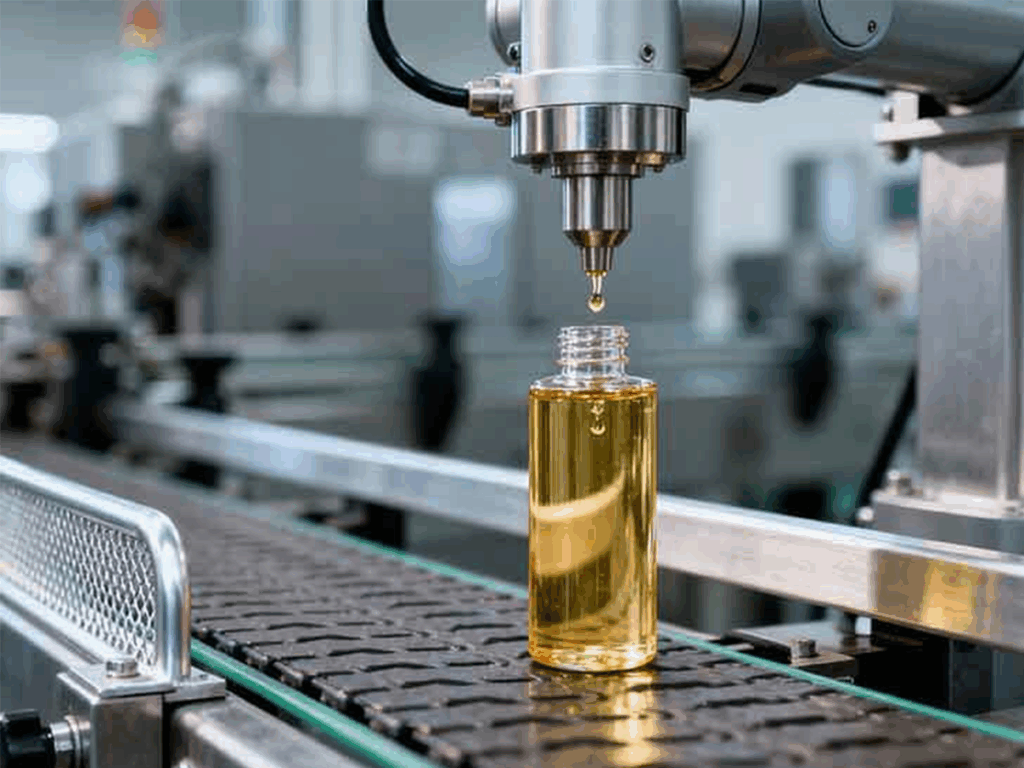
- Choose the Right Filling Method: Pick equipment that matches your oil’s thickness and packaging type so each fill lands at the correct volume. Using the right setup helps minimize waste and keeps production smooth.
- Set the Correct Fill Volume: Adjust the machine to deliver precise amounts based on your product specs. This keeps your output consistent and prevents complaints about underfilled units.
- Keep the Area Clean: Maintain a tidy and sanitary filling space to protect the product from contamination. A clean environment also keeps bottles looking professional and ready for shipment.
Capping and Labeling
- Secure Each Cap Firmly: Tighten the cap or pump to the proper torque so it stays sealed through transport and storage. A secure closure also helps prevent leaks that can damage entire cartons.
- Apply Labels Straight and Consistent: Place each label evenly so every bottle has the same presentation. This strengthens your brand’s image and helps your customer check batches at a glance.
- Check Lot Codes and Dates: Print clear batch numbers and production details on every unit. These markings make future tracking, audits, or recalls easier to manage.
Step#7 Final Inspection and Shipping
Now that your products are filled and labeled, you move into the final stage before shipping. This step makes sure every unit in the batch looks right, feels right, and meets your internal and client standards. It also prepares your products for safe transport for your customers.
Final Product Inspection
- Review Visual Quality: Look at each bottle for leaks, label issues, scratches, or dents. Small flaws can affect your customer’s confidence, so catching them now protects your brand.
- Check Packaging Strength: Test caps, bottles, and seals to make sure they can handle transport. Strong packaging reduces breakage and keeps the oil stable during long shipments.
- Confirm Batch Accuracy: Verify that the lot codes, labels, and packaging match your batch records. This ensures the entire order stays compliant and easy to trace.
Preparing for Shipping
- Pack Products Securely: Arrange units neatly in cartons with dividers or padding to avoid damage. A well-packed carton helps your shipment survive long routes or multiple handling points.
- Seal and Label Cartons: Close each carton firmly and add clear shipping labels with batch details. This makes receiving easier for your customers and keeps distribution organized.
- Schedule Pickup and Dispatch: Hand off the shipment to your logistics partner according to the agreed timeline. Staying on schedule here helps your customers plan their inventory and launches.
At TY Cosmetic, final checks follow a set routine so every batch leaves our facility clean, accurate, and shipment-ready. Our team reviews packaging strength, labeling, and lot details with the same care across all client orders. This process helps us deliver consistent results, no matter the order size or destination.
If you need support building a reliable inspection and shipping flow for your own hair line business, our team can help guide your setup.
Conclusion
I started this article with a moment from our production floor, when a batch separated because one ingredient went in too fast.
Now you’ve seen how each step, from raw materials to shipping, helps prevent problems like that. This guide walked you through the full process so you can plan your own product with more confidence.
Every stage matters, and small actions can change the final result. If you want support creating your own hair oil or improving your current workflow, our team is here to help. Contact TY Cosmetic today!